Agno Is the Only Agent Stack That Serves Four Frameworks Behind One Control Plane, and That Is Bigger Than It Looks
Agno Is the Only Agent Stack That Serves Four Frameworks Behind One Control Plane, and That Is Bigger Than It Looks
TL;DR
- Agno is shipping a runtime + control plane (AgentOS) that hosts agents built with the Agno SDK, the Claude Agent SDK, LangGraph, and DSPy behind one FastAPI app.
- 50+ production endpoints, SSE streaming, JWT-based hierarchical RBAC, OpenTelemetry traces in your database, sessions/memory/knowledge in your Postgres — no third-party egress.
- ~36,400 stars, Apache 2.0, v2.6.12 shipped June 5, 2026. Nine releases in April alone. This is a project being built, not maintained.
- The strength is real. The weakness is real. Agno is both a framework and a runtime, and the runtimes it serves are direct competitors to its framework half. We will get there.
The Hook
A customer asked me last week to wrap a LangGraph research agent and a Claude Agent SDK coding agent behind the same auth, the same audit log, and the same chat UI. I quoted them two weeks of FastAPI plumbing, a JWT middleware, a session store, an OTel collector, and a Postgres schema for memory. Then I bumped into Agno's AgentOS docs and went back to the customer with a different number.
If you have shipped a serious agent system in 2025, you have lived this. The framework part is the easy part. The production wrap is six months of cleanup: rate limits per tenant, RBAC, session continuity, streaming responses, observability that does not phone home, eval pipelines, human-in-the-loop checkpoints. Every team I have talked to is rebuilding the same control plane from scratch.
Agno is the only project in 2026 that said "we will build that part, and we will host your existing framework inside it." That sentence is the whole pitch. Everything else is details.
Why It Matters
The agent ecosystem is fragmenting exactly like the frontend ecosystem did in 2015. LangGraph owns stateful graphs. Claude Agent SDK owns Anthropic-native agent loops. DSPy owns programmatic prompt optimization. Agno (the SDK) owns a clean, model-agnostic agent abstraction with first-class tool calling and structured output. Each of them is best-in-class at one thing. None of them ships the production wrap.
The default answer in 2025 was: pick one framework, build your own control plane around it, and accept the lock-in. The 2026 answer is starting to look different. Agno's bet is that the runtime is the part you should buy, not the framework. The framework is interchangeable. The control plane is not.
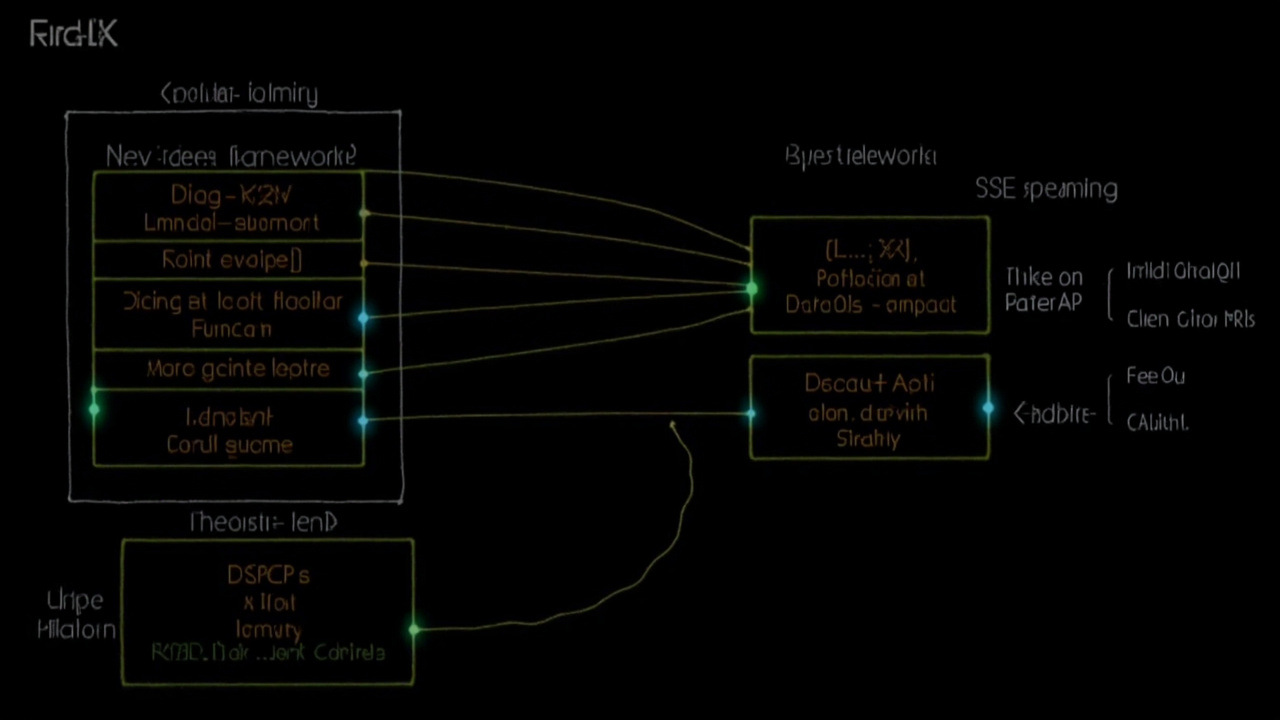
That bet shows up in the architecture. AgentOS is a single FastAPI app. You mount it next to your existing API. You register agents built with any of the four supported frameworks. They get endpoints, streaming, RBAC, traces, sessions, knowledge, and a UI — for free, in your infrastructure. You can run LangGraph graphs on the same host as Claude Agent SDK workers, served by the same control plane, audited in the same Postgres.
I have not seen another open-source project attempt this scope in 2026. Langfuse is observability. Helicone is observability. LiteLLM is a gateway. They are all layers. AgentOS is trying to be the layer above the layer.
The Details
What AgentOS Actually Is
AgentOS is the runtime. It is a FastAPI app you run on your own infrastructure — Docker, Kubernetes, bare metal, your laptop. It serves agents behind a unified HTTP/SSE interface. It is not a SaaS. It is not a managed cloud. It is a Python process with a database connection.
from agno.agent import Agent
from agno.models.anthropic import Claude
from agno.os import AgentOS
assistant = Agent(
    name="support-agent",
    model=Claude(id="claude-sonnet-4-5"),
    tools=[...],
    instructions="You are a tier-1 support agent...",
)
agent_os = AgentOS(agents=[assistant])
app = agent_os.get_app()
# uvicorn app:app
That is the entire hello world. You get a FastAPI app with the assistant mounted. Hit /v1/agents/support-agent/runs with a chat payload and you get a streamed response. There is no agento init, no cloud account, no agent config YAML to wrestle with. The framework is Python-first and the runtime ships in the same package.
The Multi-Framework Story Is the Real Feature
The same AgentOS instance can host:
- Agno SDK agents (the default)
- LangGraph graphs (
StateGraphcompiled and registered) - Claude Agent SDK agents (
ClaudeSDKClientwrapped) - DSPy programs (compiled modules exposed as agents)
from agno.os import AgentOS
from agno.langgraph import LangGraphAgent
from agno.claude_sdk import ClaudeAgent
from agno.dspy import DSPyAgent
agent_os = AgentOS(
    agents=[
        # Agno SDK agent
        Agent(model=Claude(id="claude-sonnet-4-5"), tools=[...]),
        # LangGraph graph
        LangGraphAgent(graph=my_compiled_graph),
        # Claude Agent SDK
        ClaudeAgent(name="code-worker", system_prompt="..."),
        # DSPy program
        DSPyAgent(module=my_compiled_dspy),
    ],
)
Every agent gets the same set of endpoints. Every agent streams over SSE. Every agent is gated by the same RBAC. Every agent's traces land in the same OTel pipeline. This is the thing I have not been able to do with Langfuse, Helicone, or any other "agent platform" I have evaluated this year. They all assume you have one framework. Agno is the first one that does not.
The Production Wrap, In One Stack
50+ endpoints. The HTTP API covers runs, sessions, memory, knowledge search, user management, RBAC, traces, evals, webhooks, file uploads, and tool execution. Most of them stream. You do not write a streaming protocol. You do not write a tool-execution endpoint. They are there.
JWT-based hierarchical RBAC. Scopes are hierarchical. A tenant:write scope implies tenant:read. You define roles as sets of scopes. Roles inherit. Tenants are first-class objects. Multi-tenant isolation is built into the request layer, not bolted on at the application layer. If you have ever tried to retrofit multi-tenancy onto a single-tenant agent app, you know how much pain this saves.
OpenTelemetry, in your database. AgentOS emits OTel spans. The default exporter writes them to your Postgres. There is no third-party telemetry collector. There is no SaaS dashboard you are required to use. There is no egress of your prompts, your responses, or your tool calls to anyone you did not hire. If you already run an OTel collector, point AgentOS at it. If you do not, the bundled Postgres exporter is fine. The OTel-native design is the right design for a control plane that wants to live in regulated infrastructure.
Sessions, memory, knowledge — all in your DB. Sessions are Postgres tables. Memory is a pluggable backend (Postgres by default, Redis if you want speed). Knowledge (RAG) is Postgres with pgvector and a built-in document loader. The vendor does not see your data. The vendor does not have a key to your data. The vendor is a pip install.
Guardrails and human-in-the-loop. Pre-tool-call and post-tool-call hooks. PII detection. Output validation against Pydantic schemas. Approval gates that pause a run and wait for a human response over the same SSE channel. The pattern that every serious agent team builds in month six ships out of the box.
Release Velocity Is the Tell
Nine releases in April 2026. v2.6.12 on June 5. The changelog is the kind of changelog that means there is a small team shipping every week and they are listening to production feedback. This is what a healthy open-source project looks like in 2026: not "stable 1.0 forever," but a steady drumbeat of small improvements and the occasional framework-level change. The risk profile is "fast-moving target," not "abandoned."
The Weakness You Have to Talk About
Agno is both a framework and a runtime, and the runtimes it serves are direct competitors to its framework half. If you commit to AgentOS as your control plane, you are also committing to the Agno SDK as one of the agent frameworks. That is a real conflict of interest. The team has been disciplined about it so far — LangGraph, Claude Agent SDK, and DSPy adapters are all first-class — but the structural incentive is to make the Agno SDK path the smoothest one, and eventually the path of least resistance.
The governance story is also thinner than the dedicated LLM observability tools. AgentOS emits OTel traces, but it does not ship an LLM-specific eval suite the way Phoenix (hallucination, retrieval relevance) or Helicone (cost, latency, user feedback) do. If your team needs a mature eval-driven CI loop, you will add Phoenix or Langfuse alongside AgentOS. They are not competitors — they are complements — but you should know the gap exists.
Finally, the documentation is good, not great. The AgentOS introduction page is clear. The endpoint reference is exhaustive. The framework-specific integration guides are uneven — the LangGraph and Claude Agent SDK paths are well-trodden, the DSPy path is newer and rougher. If you are the first team at your company to use AgentOS, budget a week of integration reading.
The Take
Agno is the most interesting thing happening in agent infrastructure in 2026, and I am saying that as someone who evaluated eleven "agent platforms" in the last six months. The positioning — runtime above the framework, not framework instead of the framework — is the right call, and nobody else has made it. The execution is real: 50+ endpoints, real RBAC, real OTel, real Postgres-backed memory, real multi-tenancy, and a release cadence that says "we are building this, not maintaining it."
Use this if: you have multiple agent frameworks in production or in planning, you are running a multi-tenant agent product, you are in a regulated environment where prompt and response data cannot leave your VPC, or you are tired of rebuilding the same FastAPI control plane on every new project.
Skip this if: you have a single-framework app with one tenant and no compliance constraints — LangGraph or Pydantic AI will be lighter. If you need a mature LLM-specific eval suite, plan to run Phoenix or Langfuse alongside. If your team is allergic to opinionated runtimes, the framework-plus-control-plane model will feel like a yoke.
Try first: the FastAPI + LangGraph path. Mount an existing StateGraph behind AgentOS, point the OTel exporter at a local Postgres, set up one tenant with one role, and run a real workload through it. The five-line quickstart is honest. The multi-framework story is the part you want to verify with your own data before committing. The pip install agno and the docker-compose up postgres are the only two commands you should need.
The agent platform layer is consolidating. Agno is the first project to position itself as the layer that survives the consolidation. That is a bigger bet than the framework wars, and the early evidence — the release cadence, the multi-framework adapters, the private-by-default architecture — says the team understands what they are building.
— Mr. Technology
Agno (agno-agi/agno): github.com/agno-agi/agno — ~36,400 stars, Apache 2.0, v2.6.12 (June 5, 2026), 9 releases in April 2026. AgentOS reference: docs.agno.com/agent-os/introduction. Homepage: agno.com. Install: pip install agno. Runtime: a FastAPI app + your Postgres. Supported agent frameworks: Agno SDK, LangGraph, Claude Agent SDK, DSPy.