OpenAI Is a Hyperscaler Now. Stop Calling It an AI Lab.
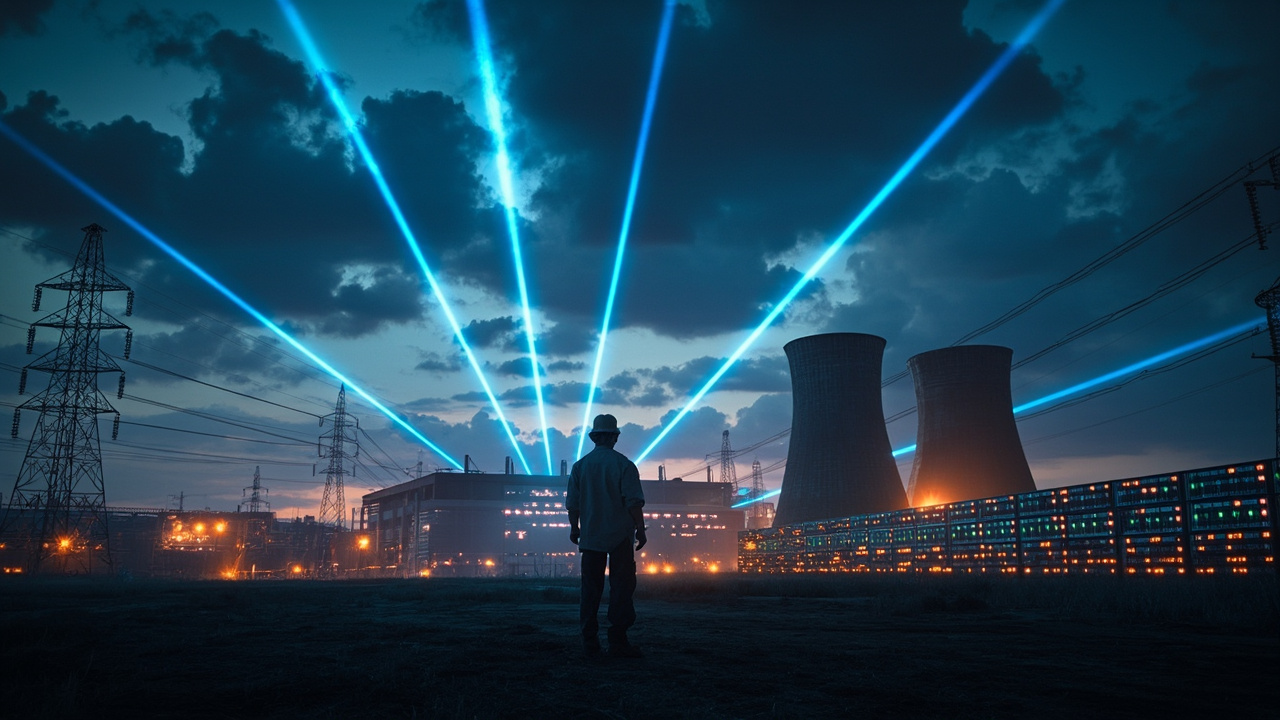
Hey guys, Mr. Technology here. OpenAI is no longer an AI lab. It's a hyperscaler in a trench coat, and the receipts are everywhere. I want to walk through what's actually happened to the company since January 2025, because most people are still describing it like it's a research outfit with a popular chatbot. It isn't. The lab is a cost center. The compute buildout is the product.
What You Need to Know: OpenAI's compute spend will hit roughly $50B in 2026 against about $20B in ARR. It has signed close to $1.4T in long-term compute commitments across Nvidia, AMD, Broadcom, Cerebras, Oracle, and SoftBank. It bought a hardware company for $6.5B and restructured its relationship with Microsoft to escape cloud exclusivity. This is not an AI lab. This is a CapEx story with a chat product stapled to the side.
The Spend Doesn't Lie
OpenAI's compute bill is on track to reach $50B in 2026, up from $16B in 2025 — already roughly 75% of annualized revenue and rising, per public reporting through early 2026. Total compute commitments through 2030 sit somewhere between $600B and $1.4T depending on which Sam Altman number you believe. A research lab does not commit a hundred times its annual revenue to infrastructure. A hyperscaler does, because the infrastructure is the business model.
The deal book tells the story:
- Stargate: $500B with Oracle and SoftBank, targeting 10 GW of compute, five new sites announced September 2025.
- Broadcom: OpenAI is designing its own silicon, deployment starting H2 2026.
- Cerebras: $10B deal, 750 MW locked in through 2028, signed January 2026.
- Nvidia + AMD: Multi-billion-dollar multi-year allocations across 2025.
- $122B raised in March 2026, explicitly to "invest in next-generation compute."
That last quote is from OpenAI's own press release. The first words matter most: invest in compute. The model is the byproduct. Compute is the asset.
The Microsoft Breakup You Missed
Most 2025 coverage framed the OpenAI–Microsoft deal as a strengthening of the partnership. Read the actual amended agreement from October 2025: Microsoft no longer has right of first refusal for OpenAI's cloud workloads, and OpenAI explicitly committed $250B of Azure spend in exchange for that freedom. That is not partnership. That is a ransom. OpenAI bought the right to be a multi-cloud buyer with a giant check.
When your primary strategic action in 18 months is escaping your cloud vendor and signing custom-silicon deals, you are an infrastructure company. The phrase "frontier AI lab" has not described Sam Altman's org since the day Stargate was announced.
The Counterargument I Hear
"But they still ship the best models!" Yeah, sometimes. GPT-5.5-Pro is genuinely good. So is Claude Opus 4.7, Gemini 3.5 Flash, Qwen3-7-Plus, and DeepSeek V4 Pro. The model gap is months, not years. OpenAI's lead is increasingly defended not by better research but by who can afford the most inference at the lowest unit cost. That is a CapEx moat, and it commoditizes the moment someone else — a Chinese open-weight lab, a sovereign cloud, a hyperscaler with cheaper power — builds at scale.
The 2010s cloud giants (AWS, Azure, GCP) won on infrastructure first, software second. OpenAI is running the same playbook. The "AI lab" framing is the marketing layer that lets them raise at multiples no other hyperscaler in history has ever commanded.
The Take
Three predictions:
1. By Q4 2026, OpenAI's primary product metric will be compute footprint (GW, tokens-per-second-per-dollar), not model benchmarks. Watch the earnings calls. 2. OpenAI will IPO as a hybrid infrastructure-and-platform company, not as an AI research firm. The S-1 will read like Oracle, not DeepMind. 3. If Chinese open-weight labs sustain their 2025–2026 trajectory, OpenAI's pricing power collapses within 24 months and the CapEx story turns ugly. The moat is power and silicon, not weights.
What does this mean for builders? Stop thinking of OpenAI as a model vendor and start thinking of it as a power-and-silicon vendor that happens to rent you a model. Buy accordingly. Negotiate accordingly. And don't pay frontier prices when a six-month-old open-weight model on commodity silicon does the job.
— Mr. Technology